
Knee & Hip
Knee Pain Going Down Stairs: Causes & What Actually Helps
Dr. Vinoth Purusothaman
PT, DPT — Co-founder, MI Therapy Clinic · Reviewed June 2026
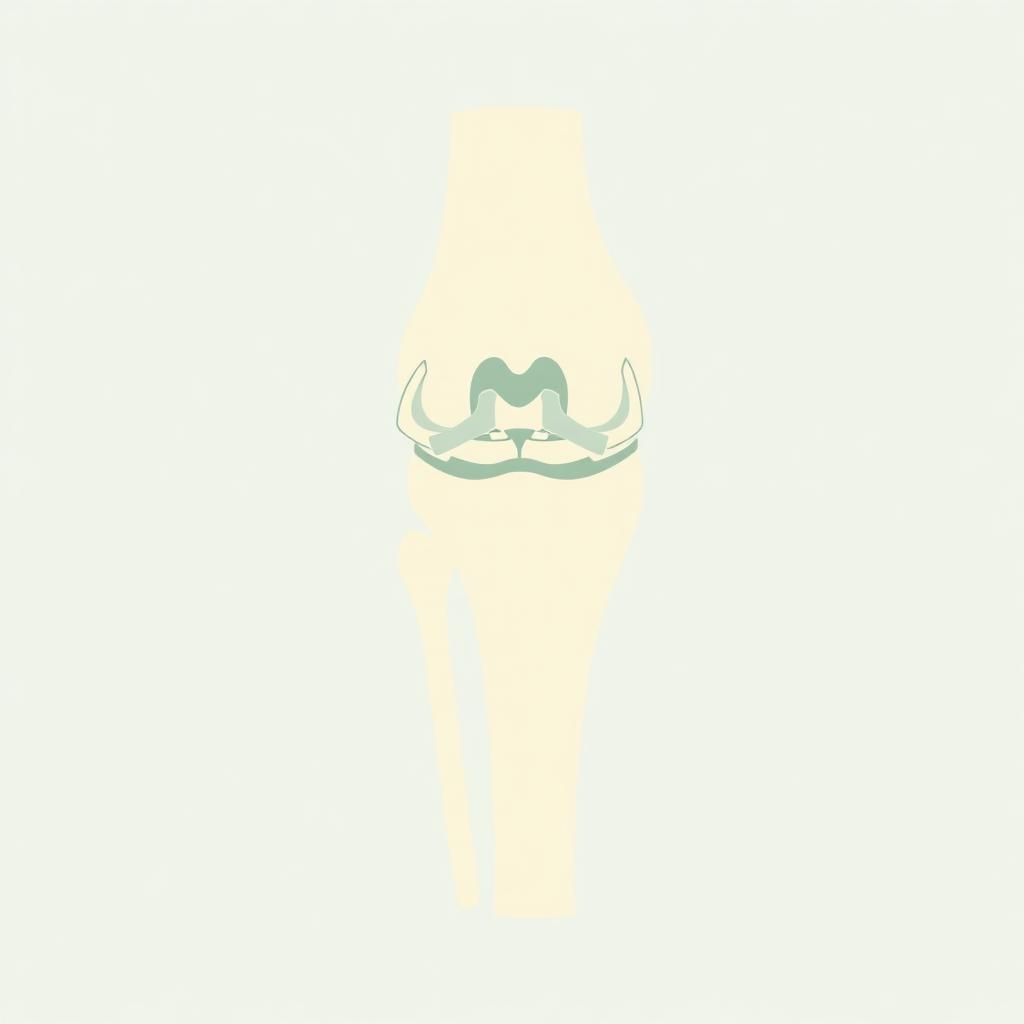
If you've started bracing for the descent every time you reach the top of a staircase, you're in good company — knee pain going down stairs is one of the most common complaints I see in patients between 35 and 70. The reason it hurts more going down than up is mechanical, predictable, and almost always treatable without surgery.
Why descending hurts more than climbing
Going up stairs, your quadriceps shorten as they push you up — this is called a concentric contraction. Going down, those same quads have to lengthen under load while controlling your descent — an eccentric contraction. Eccentric loading puts roughly 3 to 4 times more force through the kneecap and surrounding tissues than going up. That's why a knee that feels almost normal on the way up screams on the way down.
The three diagnoses behind almost every case
1. Patellofemoral pain syndrome (runner's knee)
A vague, achy pain around or behind the kneecap, worse with stairs, squatting, or sitting too long ("theater knee"). The kneecap isn't tracking smoothly through its groove on the femur, usually because the hip and glute muscles aren't controlling the thigh well. This is the most common diagnosis I make in this category — and the most fixable.
2. Patellar tendinopathy
Pinpoint pain right below the kneecap on the patellar tendon. Common in jumpers, runners, and anyone who recently increased activity. The tendon has been overloaded faster than it can adapt, and the fix is progressive loading — not rest.
3. Early osteoarthritis
Stiffness in the morning that loosens up after you move, deep aching after activity, occasional swelling. The cartilage inside the joint is thinning. Surgery is rarely the right first step; strength training, weight management, and manual therapy together outperform arthroscopic surgery for early-to-moderate knee OA in nearly every randomized trial of the last fifteen years.
Four exercises I prescribe almost every time
1. Wall sit with a slow lower
Stand with your back against a wall, feet about 18 inches out. Slide down to roughly a 60-degree knee bend (not a full squat). Hold for 10 seconds, then push back up. Reps: 8 reps, 2–3 sets. Why: isometric loading calms an irritated patellar tendon and builds quad strength without joint stress.
2. Step-downs (the gold standard)
Stand on a small step (4–6 inches to start). Slowly lower the opposite heel toward the floor over 3 full seconds, lightly tap, then push back up over 1 second. Keep your kneecap pointing straight ahead — don't let it drift inward. Reps: 10 per side, 3 sets, every other day. Why:this is the exact pattern that hurts on stairs, trained at a manageable dose. It's the single most effective exercise I have for this complaint.
3. Side-lying clamshells
Lie on your side, knees bent 45 degrees, feet stacked. Keeping your feet together, lift the top knee toward the ceiling without rolling your hips backward. Reps: 15 per side, 2 sets.Why: targets the gluteus medius — the muscle that keeps your knee from collapsing inward when you take that first step down.
4. Standing calf raises off a step
Stand on a step with your heels hanging off. Raise up onto your toes, then lower your heels slowly below the level of the step. Reps: 15 reps, 2 sets. Why: the calf and Achilles take meaningful load off the patellar tendon during stair descent.
Things that almost never help (despite the marketing)
- Knee sleeves and braces — they feel reassuring but rarely change outcomes long-term. They become a crutch the knee never gets to outgrow.
- Glucosamine and chondroitin — the highest-quality trials show no meaningful benefit over placebo.
- Pure rest — tendons and joints adapt to load. Take away all load and they get weaker, not stronger.
When to come in
- The knee gives way, locks, or catches
- Visible swelling that doesn't go down within 48 hours
- Pain that's getting worse week over week despite home work
- A snap or pop with sudden onset of pain
- You've been doing the right exercises for 4–6 weeks with no progress
Most stair-pain patients I see are back to descending without thinking about it in 6–10 visits. If yours is dragging on, call us at (248) 208-7492. No referral required in Michigan.
Want a personalized plan?
Articles are general education — not medical advice. For an evaluation tailored to your body, book a visit at MI Therapy Clinic.